What Each Ingredient Brings to the Bake
Ingredients are not interchangeable blanks: each contributes to structure, tenderness, sweetness, flavor, or how the dough behaves. Learning the roles makes recipe directions easier to follow and substitutions easier to assess.
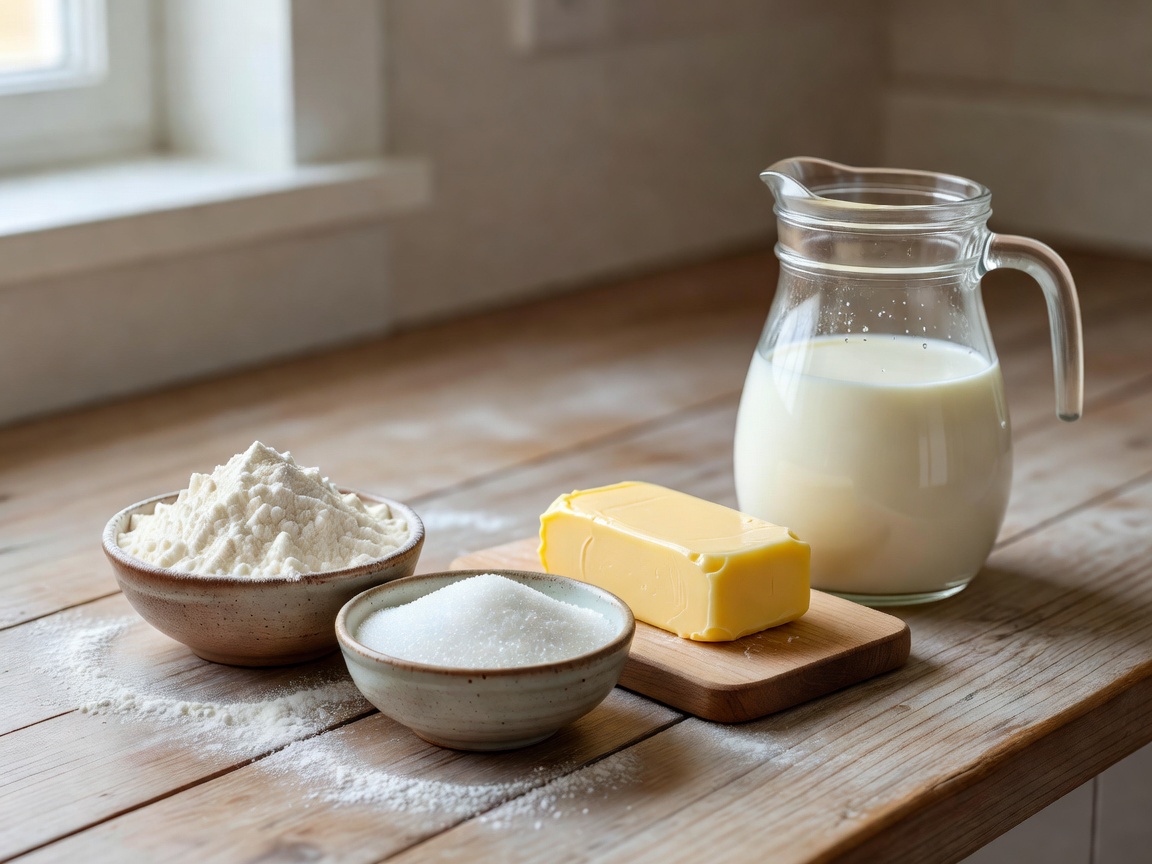
Flour: the structural base
Flour supplies starch and proteins that help a biscuit hold together. The exact result depends on the flour type, how it is measured, the recipe’s liquid, and how much the dough is worked. Scooping a measuring cup directly into a flour bag can pack in more than intended; a scale, when available, offers a repeatable method. If measuring by volume, use the recipe’s stated approach and avoid compressing the flour.
Changing flour can change absorption and tenderness. Whole-grain flour, for example, brings additional flavor and particles that interact with moisture differently from a refined white flour. A small adjustment may be workable in some recipes, but a full replacement is best approached with a formula designed for that flour.
Fat: tenderness, flavor, and handling
Butter, shortening, oil, and other fats differ in flavor, water content, and firmness. Solid fats can help create particular textures when cut or rubbed into flour; melted or liquid fat behaves differently. The recipe’s method is part of the ingredient choice. If it asks for softened butter, chilled butter is not a simple equivalent, because the two conditions cream and distribute differently.
Temperature matters. Warm fat can make a dough feel greasy or soft, while cold fat may remain in small pieces when a recipe intends that structure. Follow the specified preparation and let visual cues guide you.
Sugar: sweetness and more
Sugar sweetens and influences browning, moisture, spread, and crispness. Granulated sugar, brown sugar, and other sweeteners bring different moisture and flavor characteristics. Reducing sugar can change more than sweetness, and swapping a liquid sweetener for a dry one changes the balance of the dough. If you want to adjust sweetness, begin with a recipe that already suits your preference.
Liquid, eggs, salt, and leaveners
Milk, water, eggs, or other liquids hydrate dry ingredients and help the dough come together. Eggs can contribute structure, richness, color, and moisture. Salt supports flavor balance, even in sweet biscuits. Baking powder and baking soda are chemical leaveners, but their quantities and roles depend on the formula and its acidic ingredients; they are not automatically one-for-one substitutes.
When considering flour
Look at the recipe’s flour type and measurement method first. A different flour may change both hydration and tenderness; test thoughtfully rather than assuming the dough will feel identical.
When considering fat
Check whether the recipe calls for chilled, softened, melted, or room-temperature fat. The form affects mixing, spread, and the texture the method is designed to create.
When considering sugar
Sweetness, browning, and moisture can all respond to sugar changes. Make a modest adjustment only when you are comfortable with a possible texture difference.
When considering liquid
Add liquid as the method directs. Humidity, flour absorption, and measurement can affect how much is needed for the dough to come together.
A sensible way to adapt a recipe
- Read the ingredient list and method all the way through.
- Identify the role of the ingredient you want to change.
- Use a recipe designed for a dietary need or alternative ingredient when possible.
- Change one variable at a time and note what you observe.
Ingredient guidance is general. Allergies and dietary requirements need careful label checks and recipe-specific decisions; do not assume a substitution is safe simply because it is common.