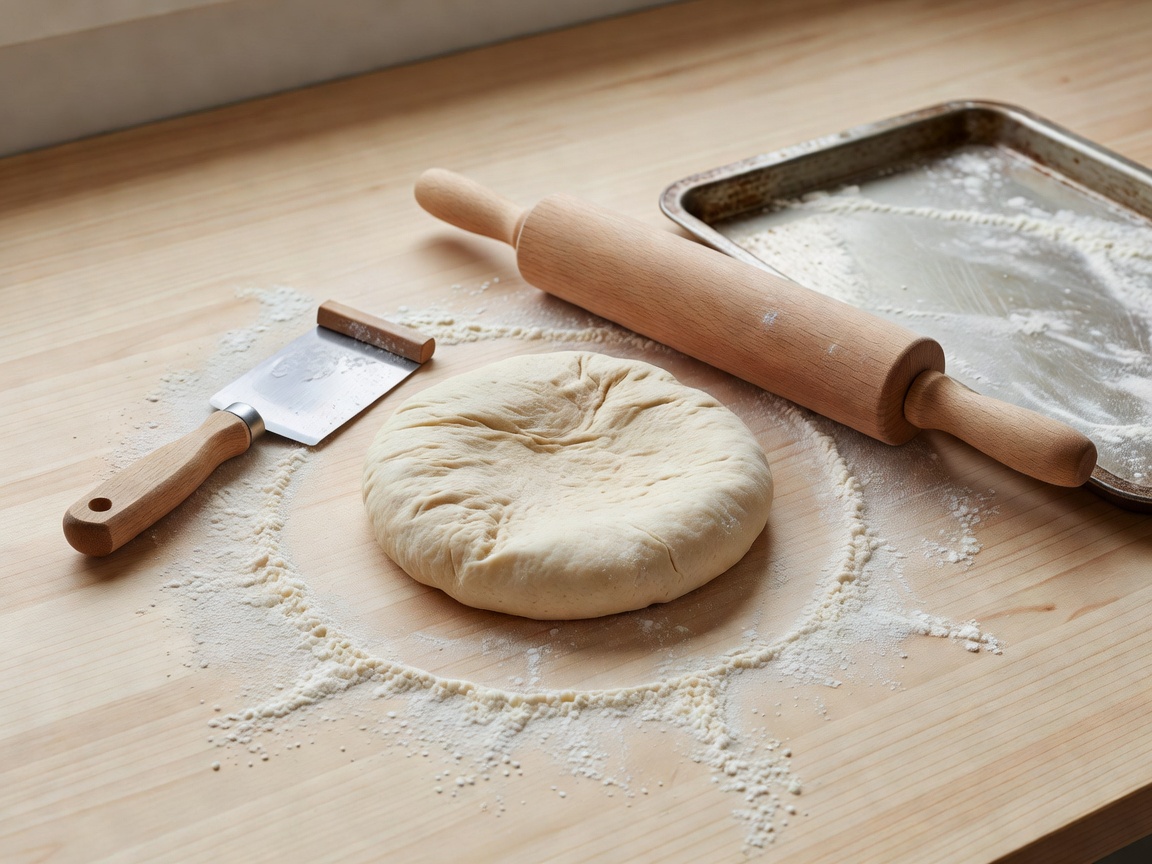
Before the mixing begins
Read the recipe once without starting. Notice whether the fat should be chilled, softened, or melted; whether the dough needs resting or chilling; and when the oven and tray should be prepared. Bring out the equipment you will use. Measuring ingredients before mixing helps avoid discovering an omitted component halfway through.
Prepare the baking tray exactly as directed. Parchment, a bare tray, or a lightly greased surface can each affect the bottom of a biscuit. Oven temperatures can vary, so learn the behavior of your own oven over time, but use the recipe’s stated temperature as the initial guide.
A clear baking sequence
Measure consistently
Use the recipe’s measurement method. Level dry measures where required, and avoid packing ingredients unless explicitly instructed.
Mix dry ingredients
Distribute flour, salt, and leavener evenly. This helps avoid pockets of one ingredient in the finished dough.
Work in the fat
Follow the recipe’s method—creaming, rubbing, cutting, or stirring. Each approach creates a different starting structure, so the method matters.
Add liquids as directed
Bring the mixture together without prolonged mixing. Stop when it reaches the recipe’s described state; a little unevenness may be preferable to tough, overworked dough.
Rest, chill, or shape
Do not skip a rest or chill without considering its purpose. It may hydrate flour, firm fat, or make shaping more manageable.
Portion with care
Keep pieces similar in size and leave the spacing specified. Consistent portions make it easier for pieces on one tray to finish at a similar time.
Bake and observe
Use the time as a guide and the recipe’s visual cues as a check. If a tray appears uneven, note where pieces are positioned in your oven.
Cool before moving or storing
Some biscuits firm as they cool. Follow the method’s tray-rest instruction, then transfer carefully to a rack if directed.
What dough can tell you
Dough that crumbles may need the method’s full amount of liquid or more mixing to bind, but resist adding liquid automatically: first check whether it has been mixed as directed. Dough that feels sticky can reflect warm ingredients, the recipe itself, or measuring differences. If chilling is part of the method, give it the stated time. If the recipe does not call for chilling, dusting the surface lightly may be more appropriate than adding flour throughout the dough.
When rolling, use steady pressure and turn the dough occasionally to reduce sticking. Keep thickness even if the recipe asks for uniform pieces. Cut cleanly rather than twisting a cutter when a crisp edge is desired. For scoop-and-drop dough, avoid compacting every portion into a dense ball unless the recipe says to do so.
Read the bake, not just the timer
Recipe cues differ. A pale biscuit may be ready in one style, while another relies on a golden edge. Look for the cues named in the method and remember that carryover heat and tray material can affect the final set. Make a brief note after baking: dough temperature, room conditions, tray position, and how the biscuits cooled. Those observations make the next attempt more informative.