Keep Biscuits Ready to Enjoy
Storage starts with cooling. Once biscuits are fully cool, the right container and a little separation between textures can help them stay closer to the state you intended.
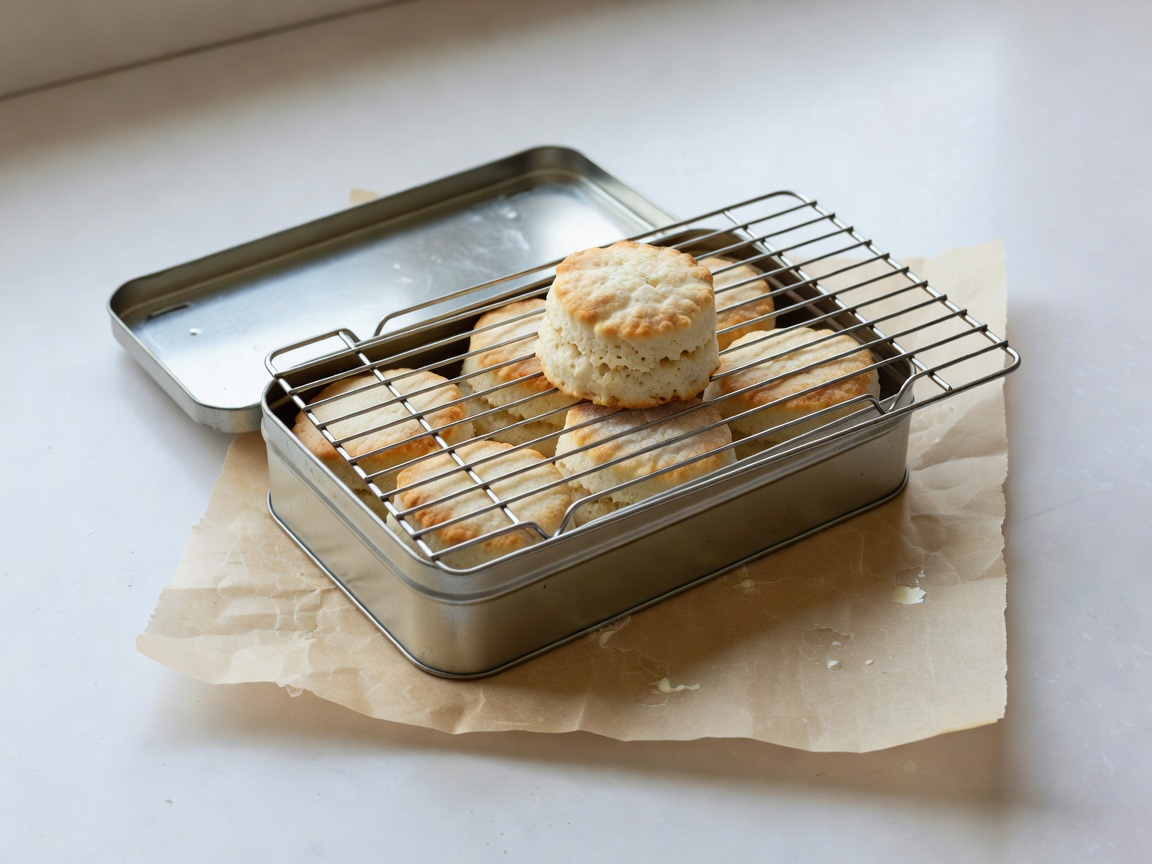
Cool first, then pack
Biscuits release heat and moisture as they cool. Packing them while warm can create condensation inside a container, which may soften a crisp biscuit. Follow the recipe’s cooling directions and let the pieces reach room temperature before storing. Delicate biscuits may need a little extra care when transferring so they do not break before they have set.
Choose a clean, dry, airtight container appropriate to the batch. A well-fitting lid helps limit exposure to air and humidity. Store the container somewhere cool and dry, away from steam, direct heat, and strong odors. Keep decorations or fillings in mind: a biscuit with a perishable filling may need different handling from a plain, dry biscuit.
Keep textures from competing
Crisp biscuits can absorb moisture from softer baked goods. If you have a mixed assortment, store distinct textures separately where possible. This also helps preserve individual flavors. Layers can be separated with suitable food-safe paper when the biscuits are sturdy enough to stack without crushing.
Soft biscuits may lose moisture over time, while crisp biscuits can become less crisp when exposed to humid air. There is no universal storage duration for every recipe, ingredient, and environment. Check the specific recipe’s directions, consider any filling or topping, and use your judgment about freshness and food safety.
| What you have | Helpful first step | Storage thought |
|---|---|---|
| Crisp, plain biscuits | Cool completely on a rack if the method directs | Use a dry, airtight container; keep away from humidity |
| Soft or chewy biscuits | Allow them to cool without leaving them exposed for too long | Protect from drying; use recipe-specific guidance |
| Decorated biscuits | Make sure any icing or finish has set | Prevent smudging and avoid stacking until stable |
| Filled or perishable biscuits | Check the filling ingredients and recipe directions | Follow suitable food-safety storage instructions |
Freezing and making ahead
Some biscuits freeze well, but suitability depends on ingredients, shape, and decoration. A recipe may recommend freezing unbaked portions, finished biscuits, or neither. Package items securely, label contents and date, and follow the recipe’s thawing or baking directions. Avoid repeatedly warming and cooling a batch, since changes in temperature can affect texture and quality.
If you are preparing biscuits for an event, test the storage plan with a small batch first. Check how the biscuits look and feel after cooling, packing, and transporting. This gives you a practical sense of whether the chosen container and timing suit the style.
Serve with a little thought
Bring biscuits out shortly before serving if they are best enjoyed at room temperature, unless the recipe or filling requires colder storage. Offer small portions on a plate and keep the rest protected until needed. A simple note about ingredients can also be helpful when sharing with guests who have dietary needs or allergies.